Garmin India · official partnerSealed retail carton, full India warrantyPrepaid, GST invoice
Smartwatch · 7 min · Field brief
A field log from the Hennur Bamboo Forest 100K — what an ultra-distance Garmin actually does when the day stretches past sundown.
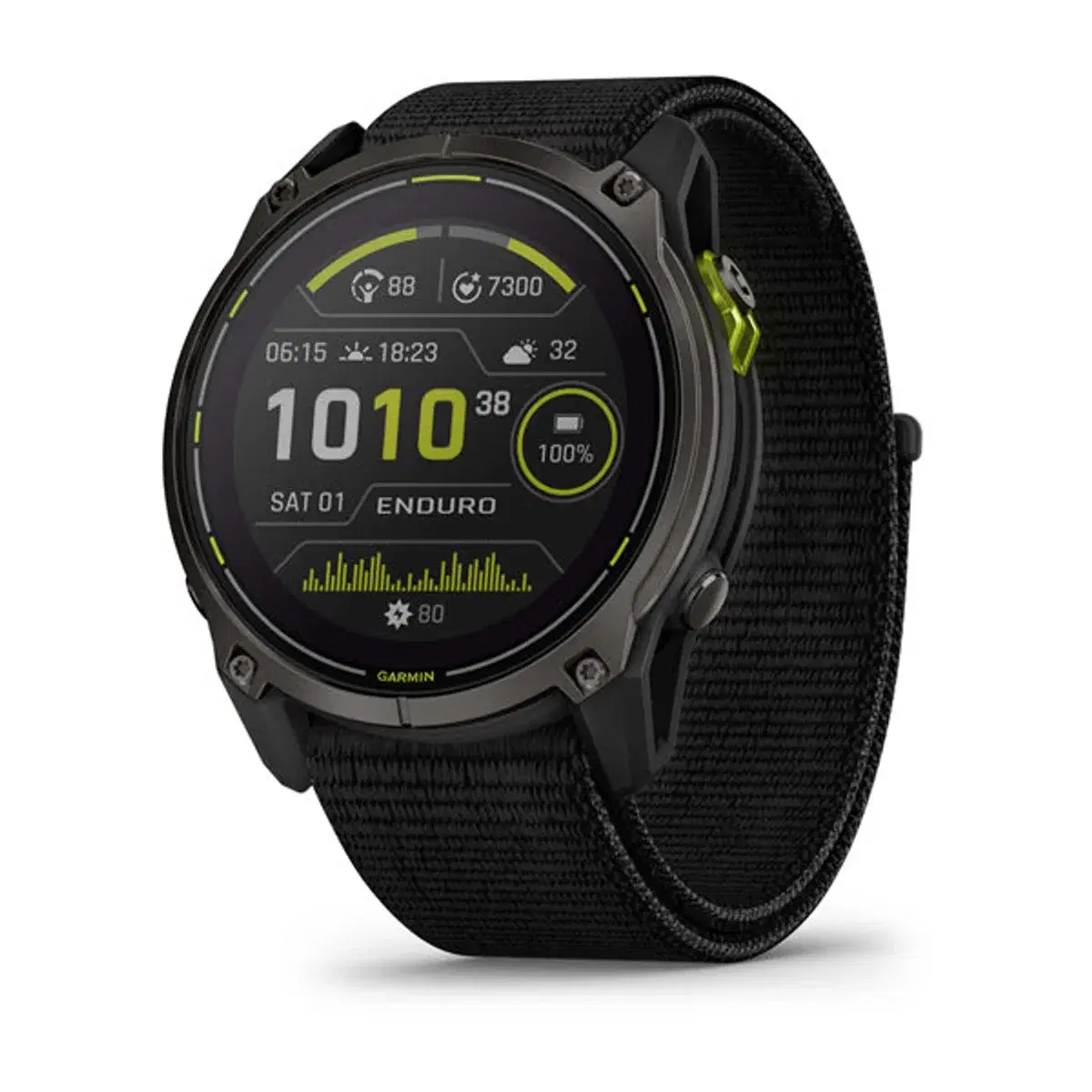
Enduro 3 was tested at the Hennur Bamboo Forest 100K — Bengaluru's flagship ultra. The brief covers the 16-hour finish line, the watch's behaviour through the night sections, the solar maths against November daylight, and what the data looked like when it landed in Connect on Monday morning.
Who it is for
Audience — 100k–161k ultra runners, multi-day fastpackers, alpinists on long routes, and the rare triathlete who needs more than 36 hours of GPS in one charge.
Positioning — Garmin's ultra-distance flagship. Trades AMOLED brightness for MIP battery economy — a trade only ultra runners properly understand.
From the field
Built-in LED flashlight on the 10 o'clock flank — 7 lumens, hands-free. Useful when you forget to charge the head-torch the night before. White for trail markers, red for night-vision when crewing.
Ultra-Run mode (UltraTrac) drops the GNSS sample rate to extend battery; the watch still tracks distance accurately on the looped course. Pace fluctuates ±5% in heavy bamboo canopy — the multi-band fix recovers within 30 seconds.
Body Battery hits 5; HRV trends inform when to take the breaks. The watch does not tell you to stop — it tells you that if you do not, the readings will keep dropping. PacePro adjusts the projected finish in real time as your pace decays.
Battery still showing 41% on the watch. The sapphire MIP face is unmarked. The whole race lands in Garmin Connect on the post-race Wi-Fi sync — splits, HR, elevation, pace decay curves, recovery time recommendation.
The numbers
Keep it alive
The apps that extend it
Garmin Connect
Training load, race energy, recovery time, sleep coaching.
PacePro
Course-aware split targets — pre-race upload via Connect.
Connect IQ
Race energy, ultra-data fields, segment timers.
Garmin Coach
Adaptive ultra plans — week-by-week prescriptions.